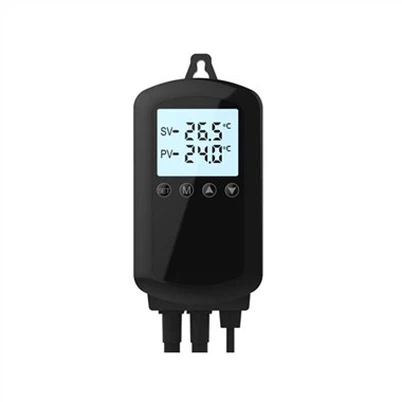
Touch vs Physical Buttons: Durability Comparison for Smart Thermostats
Leave a message
When selecting a high-quality smart thermostat for residential, commercial and HVAC projects, durability of control buttons is a core factor affecting long-term service life, maintenance costs and daily operation. Modern thermostats mainly adopt two control solutions: capacitive touch buttons and traditional physical tactile buttons. Each design has unique durability strengths and weaknesses, directly influencing performance in different environments and usage scenarios. This article breaks down their pros and cons to help you make a cost-effective choice.
Durability Advantages of Touch Control Buttons
Zero mechanical wear for longer service lifeTouch buttons rely on capacitive sensing technology with no movable internal parts. There are no springs, elastic pieces or mechanical structures that degrade with frequent pressing. This avoids common aging issues such as jamming or failure after long-term use, supporting millions of times of stable operation.
Seamless & dustproof waterproof structureThe integrated smooth panel leaves no gaps between buttons, effectively blocking dust, oil stains, moisture and fine debris. It performs excellently in humid kitchens, dusty offices and high-humidity industrial spaces, reducing internal circuit damage caused by pollutant infiltration.
Strong surface scratch resistanceMost touch thermostat panels adopt tempered glass or high-strength coating materials. The wear-resistant surface resists daily scratches, friction and surface corrosion, maintaining a new appearance and stable sensing performance for years.
Durability Disadvantages of Touch Control Buttons
Sensitive to extreme usage conditionsCapacitive touch induction is easily affected by wet hands, gloves, low temperature or static electricity. In humid environments or special work scenarios, delayed response or induction failure may occur, affecting continuous use stability.
High risk of accidental touch & surface damageUltra-sensitive touch design leads to unintended misoperation caused by accidental collision. Meanwhile, sharp objects may crack the panel, and long-term oil adhesion will gradually weaken touch sensitivity, increasing later maintenance risks.
Higher dependence on continuous power supplyTouch sensing modules need stable power support. In low-power battery-powered scenarios, frequent standby induction may accelerate power consumption and even cause functional failure in low battery.
Durability Advantages of Physical Buttons
Reliable tactile feedback & anti-misoperationPhysical buttons provide clear click feedback with moderate pressing force requirements. They will not be triggered by accidental contact, ensuring accurate operation. Users can even control the thermostat blindly, which is friendly for the elderly and industrial scene operators.
Strong environmental adaptabilityPhysical mechanical structures are not affected by humidity, gloves or static electricity. They work stably in harsh conditions such as high humidity, low temperature and oil pollution, with extremely low failure rates in complex HVAC application environments.
Low power consumption & stable hardware performanceWithout complex sensing chips, physical buttons achieve mechanical conduction with ultra-low power consumption. They are compatible with battery-powered wall-mounted thermostats, and will not malfunction due to insufficient power, featuring stronger hardware stability.
Durability Disadvantages of Physical Buttons
Inevitable mechanical aging lossLong-term repeated pressing will cause spring fatigue, rubber aging and metal contact corrosion. After long-term use, problems such as unresponsive pressing, stuck buttons and rebound failure are common, shortening the overall service life.
Gap contamination & difficult maintenanceGaps between raised physical buttons easily accumulate dust and dirt. Over time, debris will block the button structure, accelerate wear and require regular cleaning and maintenance to ensure normal use.
Limited structural design & wear agingBulky button structures are prone to edge wear and paint peeling. Compared with integrated touch panels, they have weaker overall airtightness and are more susceptible to moisture erosion from gaps.
Conclusion & Selection Guide
In short, touch control thermostats win in overall durability, appearance and easy maintenance, ideal for modern homes, high-end commercial buildings and dry and clean environments. Physical button thermostats excel in environmental adaptability and operational stability, perfectly suitable for factories, warehouses, wet public areas and places with frequent rough operation.
As a professional HVAC thermostat supplier, we optimize both control solutions. Our touch thermostats upgrade anti-humidity sensing chips, while physical button models adopt high-density waterproof and dustproof designs. Whether you pursue minimalist intelligence or industrial-grade reliability, we can provide customized durable smart thermostat solutions to reduce your long-term replacement and maintenance costs.
In short, touch control thermostats win in overall durability, appearance and easy maintenance, ideal for modern homes, high-end commercial buildings and dry and clean environments. Physical button thermostats excel in environmental adaptability and operational stability, perfectly suitable for factories, warehouses, wet public areas and places with frequent rough operation.
As a professional HVAC thermostat supplier, we optimize both control solutions. Our touch thermostats upgrade anti-humidity sensing chips, while physical button models adopt high-density waterproof and dustproof designs. Whether you pursue minimalist intelligence or industrial-grade reliability, we can provide customized durable smart thermostat solutions to reduce your long-term replacement and maintenance costs.