High Standby Power Consumption: Hidden Long-Term Risks of Ordinary Thermostats
Leave a message
When choosing a smart thermostat for residential, commercial and HVAC system matching, most buyers focus only on temperature control accuracy, intelligent linkage functions and appearance design, while easily ignoring a key indicator - standby power consumption.
Many traditional common thermostats maintain continuous power supply operation even in standby mode. Excessively high standby power may seem to consume only a small amount of power in a short time, but it will trigger a series of hidden troubles in long-term daily use and long-term system operation, bringing multiple invisible losses to users.
1. Continuous Increase in Electricity Costs
High standby power consumption directly leads tocontinuous increase in electricity costs. HVAC equipment such as heating, ventilation and air conditioning needs to run stably for a long time throughout the year, and the thermostat will be in standby state for most of the time every day. Long-term cumulative idle power consumption will form unnecessary power waste.
For large shopping malls, office buildings, hotels and other commercial scenarios with a large number of thermostats deployed, the annual extra electricity expense caused by high standby loss is quite considerable, greatly increasing the daily operation cost of the building.
2. Accelerated Aging of Internal Components & Shortened Service Life
Long-term high-load standby operation will accelerate the aging of internal electronic components of the thermostat. Continuous power heating will keep the circuit board, chip, power module and other key parts in a weak working state for a long time, which is easy to cause circuit overload, component aging and performance degradation.
This will directly shorten the service life of the thermostat, increase the frequency of equipment failure, and lead to frequent problems such as temperature sensing failure, slow response and system disconnection in the later stage. Frequent maintenance, replacement and after-sales maintenance will further raise the comprehensive use cost.
3. Potential Safety Hazards to HVAC Systems
Unstable high standby power consumption will also bring potential safety hazards to the HVAC control system. Long-term heat accumulation inside the equipment may cause poor heat dissipation, and in severe cases, it may induce short circuit of internal lines, which will affect the normal and stable operation of the entire air conditioning and heating system.
For household users, it will also bring hidden dangers to indoor electrical safety and reduce the overall safety of home intelligent equipment.
4. Conflict with Low-Carbon & Energy-Saving Trends
From the perspective of energy conservation and environmental protection, excessive invalid standby power consumption violates the current mainstream low-carbon and energy-saving development trend. Whether it is family energy-saving renovation or green building construction of commercial projects, low-power and low-loss electrical supporting equipment has become a rigid demand.
Thermostats with high standby loss are not only not in line with energy-saving assessment standards, but also reduce the environmental protection competitiveness of the overall building supporting system.
Solution: Our Low-Power Smart Thermostat
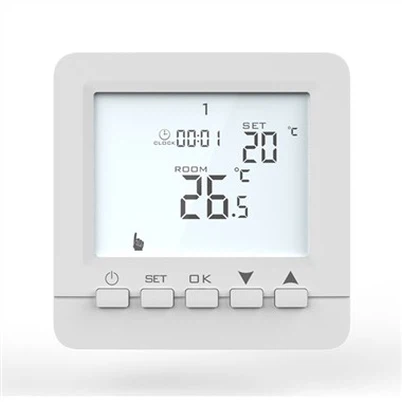
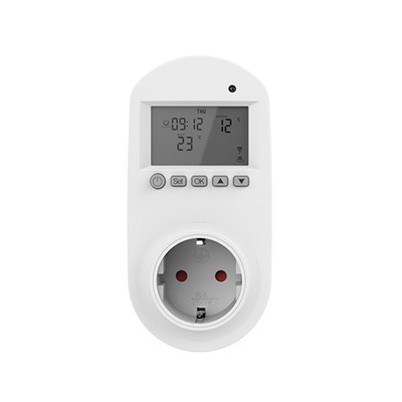
To solve these long-term pain points caused by high standby power consumption, our smart thermostat is optimized and upgraded in power management technology. With professional low-power chip design and intelligent power-saving control logic, it effectively controls standby power consumption at an ultra-low level.
While ensuring sensitive temperature control, stable intelligent connection and accurate HVAC regulation, it realizes long-term energy saving and consumption reduction.
Widely Applicable to Multiple Scenarios
Whether for home heating & cooling control, office building central air conditioning management, or hotel and industrial supporting HVAC systems, our low-power smart thermostat can help users reduce electricity bills, extend equipment service life, reduce maintenance troubles, and meet dual needs of stable operation and green energy saving.
Choosing a low standby power consumption smart thermostat is not only a small optimization for daily power saving, but also a long-term cost-effective choice for stable system operation and safe use.