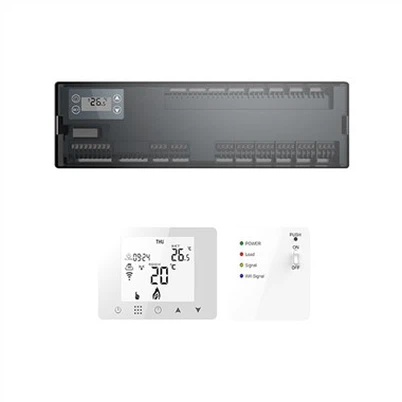
Why Do Heater Thermostats Not Work Properly? Troubleshooting Guide for HVAC Professionals
Leave a message
In the HVAC industry, a malfunctioning heater thermostat is one of the most frequent service calls for installers and property managers. What seems like a faulty device often stems from overlooked installation errors, environmental interference, or compatibility mismatches-issues that can be resolved without replacing the entire unit. For professionals tasked with maintaining efficient heating systems, understanding the root causes of thermostat failure is critical to reducing service costs, improving client satisfaction, and optimizing system performance.
Common Causes of Heater Thermostat Malfunctions
1. Incorrect Installation & Wiring Errors
Improper wiring is the leading culprit behind thermostat malfunctions, especially for smart, programmable models like the Hysen Smart Thermostat.
Loose or mismatched connections: Thermostats rely on precise wiring to communicate with heating systems. Loose terminal screws, swapped R (power) and W (heat) wires, or damaged insulation can cause intermittent heating, no response, or even short circuits.
Improper mounting location: A thermostat installed too close to heat sources (radiators, direct sunlight, incandescent lights) or cold drafts (windows, exterior walls) will register inaccurate temperatures, leading to the heater cycling on/off unnecessarily or failing to reach setpoints.
Voltage incompatibility: Most heater thermostats operate on low voltage (24V), while some older systems use line voltage (120V/240V). Using a low-voltage thermostat on a line-voltage system will result in immediate failure and potential safety hazards.
2. Sensor Degradation & Calibration Issues
The temperature sensor is the "brain" of the thermostat, and its accuracy directly impacts system functionality.
Sensor drift: Over time, internal NTC (Negative Temperature Coefficient) sensors can experience drift, causing the thermostat to misread ambient temperatures by 2–5°F. This leads to uneven heating, where some rooms feel too warm while others remain cold.
Dirty or blocked sensors: Dust, debris, or even paint buildup on the sensor can insulate it, preventing accurate temperature detection. For wall-mounted thermostats, this is a common issue in commercial spaces with high dust levels.
Calibration errors: Many thermostats allow manual calibration, but incorrect adjustments during installation or maintenance can throw off temperature readings. Without proper calibration, the thermostat will not trigger the heater at the correct time.
3. Power Supply Problems
Thermostats require a consistent power source to operate, and disruptions often mimic device failure.
Dead batteries: Battery-powered thermostats will lose functionality when batteries die, leading to unresponsive displays and failed heating cycles. Even hardwired models may have backup batteries that need replacement annually.
Tripped breakers or blown fuses: Line-voltage thermostats are connected to the building's electrical system. A tripped circuit breaker or blown fuse will cut power to the thermostat, rendering it useless.
Transformer failures: Low-voltage systems depend on a transformer to reduce power from 120V to 24V. A faulty transformer will cause the thermostat to flicker, freeze, or stop working entirely.
4. Compatibility & Communication Gaps (Smart Thermostats)
Modern smart thermostats offer advanced features like remote control and energy monitoring, but they also introduce new failure points for HVAC professionals.
Incompatible heating systems: Smart thermostats may not work with multi-stage furnaces, heat pumps with auxiliary heat, or zone-controlled systems unless they are specifically designed for these setups. For example, using a single-stage thermostat on a two-stage furnace will prevent the system from operating at its optimal efficiency.
Wi-Fi connectivity issues: While not a direct heating failure, lost Wi-Fi connectivity can disable remote control features and prevent firmware updates-critical for fixing bugs and improving performance. Weak signals or router problems are common culprits in large commercial properties.
Firmware glitches: Outdated firmware can cause the thermostat to freeze, crash, or misinterpret user commands. Regular firmware updates are essential, but many property managers overlook this maintenance step.
5. Wear & Tear of Mechanical Components
Traditional mechanical thermostats (with bimetallic strips) are prone to physical wear, even if they are less technologically complex.
Stuck contacts: The internal switch that triggers the heater can become stuck due to corrosion or dust, leading to continuous heating or no heating at all.
Damaged bimetallic strips: The strip that expands and contracts with temperature changes can bend or break over time, eliminating the thermostat's ability to regulate heat.
Troubleshooting Tips for HVAC Professionals
Verify Installation First: Check wiring against the manufacturer's diagram, confirm the mounting location is free from heat/cold interference, and ensure voltage compatibility.
Test the Sensor: Use a multimeter to measure the sensor's resistance and compare it to the manufacturer's specifications. For smart models, run a temperature calibration test via the mobile app.
Check Power Sources: Replace batteries, test transformers, and inspect circuit breakers to rule out power-related issues before assuming the thermostat is faulty.
Update Firmware & Check Compatibility: For smart thermostats, ensure firmware is up to date and confirm compatibility with the heating system's configuration (e.g., multi-stage, heat pump).
Why Partner with Hysen for Reliable Thermostat Solutions?
As an HVAC professional, you need thermostats that are durable, easy to install, and compatible with a wide range of heating systems. Hysen's industrial-grade smart thermostats are engineered to address the common pain points outlined above:
Precision sensor technology: Our thermostats use high-stability NTC sensors with minimal drift, ensuring accurate temperature readings for up to 10 years.
Universal compatibility: Designed for low-voltage and line-voltage systems, as well as multi-stage furnaces and heat pumps, reducing installation errors.
Robust wiring terminals: Secure, color-coded terminals prevent loose connections, while clear installation guides simplify setup for technicians.
Remote diagnostics: Hysen's cloud-based platform allows professionals to troubleshoot thermostat issues remotely, reducing on-site service calls and improving efficiency.
Final Thoughts
A malfunctioning heater thermostat is rarely a sign of a defective device-it is often a symptom of improper installation, environmental factors, or maintenance oversights. By understanding these root causes, HVAC professionals can diagnose issues faster, reduce service costs, and deliver better outcomes for their clients.
For more technical insights, product updates, and exclusive discounts for HVAC installers and property managers, subscribe to the Hysen Professional Newsletter today.
#HVAC #ThermostatTroubleshooting #SmartHVAC #FacilityManagement #HeatingSolutions