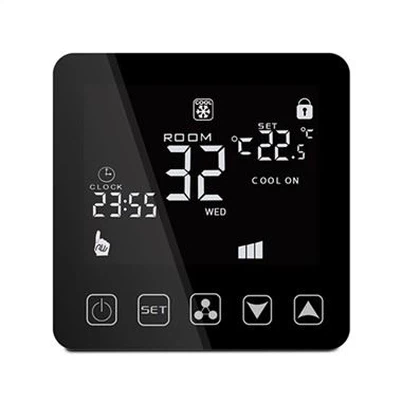
Sensor of intelligent thermostat
Leave a message
In order to alleviate the problem of human errors related to programmable thermostats, the intelligent thermostat uses a sensor that can determine the occupancy mode, thereby automatically changing the temperature according to the occupant's mode and behavior. The sensor informs the thermostat whether the house is occupied. In the absence of occupants, the thermostat can suspend heating/cooling until someone reactivates the sensor. The sensor is also used to determine occupancy patterns to create automatic schedules. The grid member is placed in front of the sensor to visually hide and protect the PIR motion sensor inside the thermostat. The grille also helps to make the thermostat visually pleasing. Although this sensor technology is important for energy conservation, it is not without defects. One of the main problems is that the sensor must be activated by someone walking in front of or near the thermostat. The passenger may be at home without passing in front of the sensor. In this case, the thermostat will turn off heating/cooling and reduce human comfort.