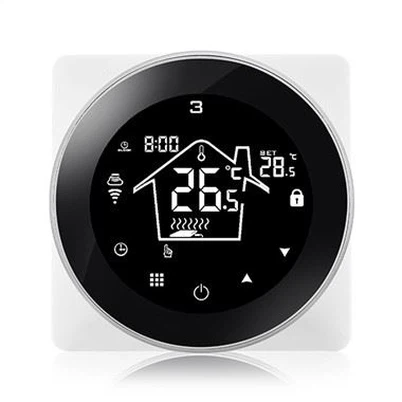
How can thermostats be more energy-efficient?
Leave a message
Simply turning your thermostat back from the normal setting of 7°-10°F for 8 hours a day can save up to 10% a year on your heating and cooling bills. Buildings in mild climates save a greater percentage from setbacks than buildings in harsh climates.
The smaller the difference between indoor and outdoor temperatures, the lower your overall cooling costs. You can easily save energy in the winter by simply setting your thermostat to around 68°F to 70°F when you're awake and lower when you're sleeping or away. In the summer, you can follow the same strategy as your central air conditioner, keeping your house warmer than usual while you're away and setting the thermostat to a high setting that you're comfortable with when you're home and need to cool off, and making sure the humidity is controlled when needed.
While thermostats can be adjusted manually, a programmable thermostat can prevent any discomfort by returning the temperature to normal before you wake up or come home.
When you turn on your air conditioner, avoid setting the thermostat to a lower-than-normal setting. It won't cool your home faster and can lead to overcooling, which incurs unnecessary costs. A common misconception associated with thermostats is that the furnace will work harder than usual to heat the space to a comfortable temperature after the thermostat is turned down, resulting in little or no savings. The truth is that once your house is cooler than normal, it will lose energy to its surroundings more slowly.
In the winter, the lower the indoor temperature, the slower the heat will dissipate. Therefore, the longer your home stays cooler, the more energy you save because your home loses less energy than it would at higher temperatures. The same concept applies to raising your thermostat setting in the summer - higher indoor temperatures slow the rate at which heat enters your home, saving energy on air conditioning. Check out our home heating infographic for more information on how heating systems and thermostats interact.