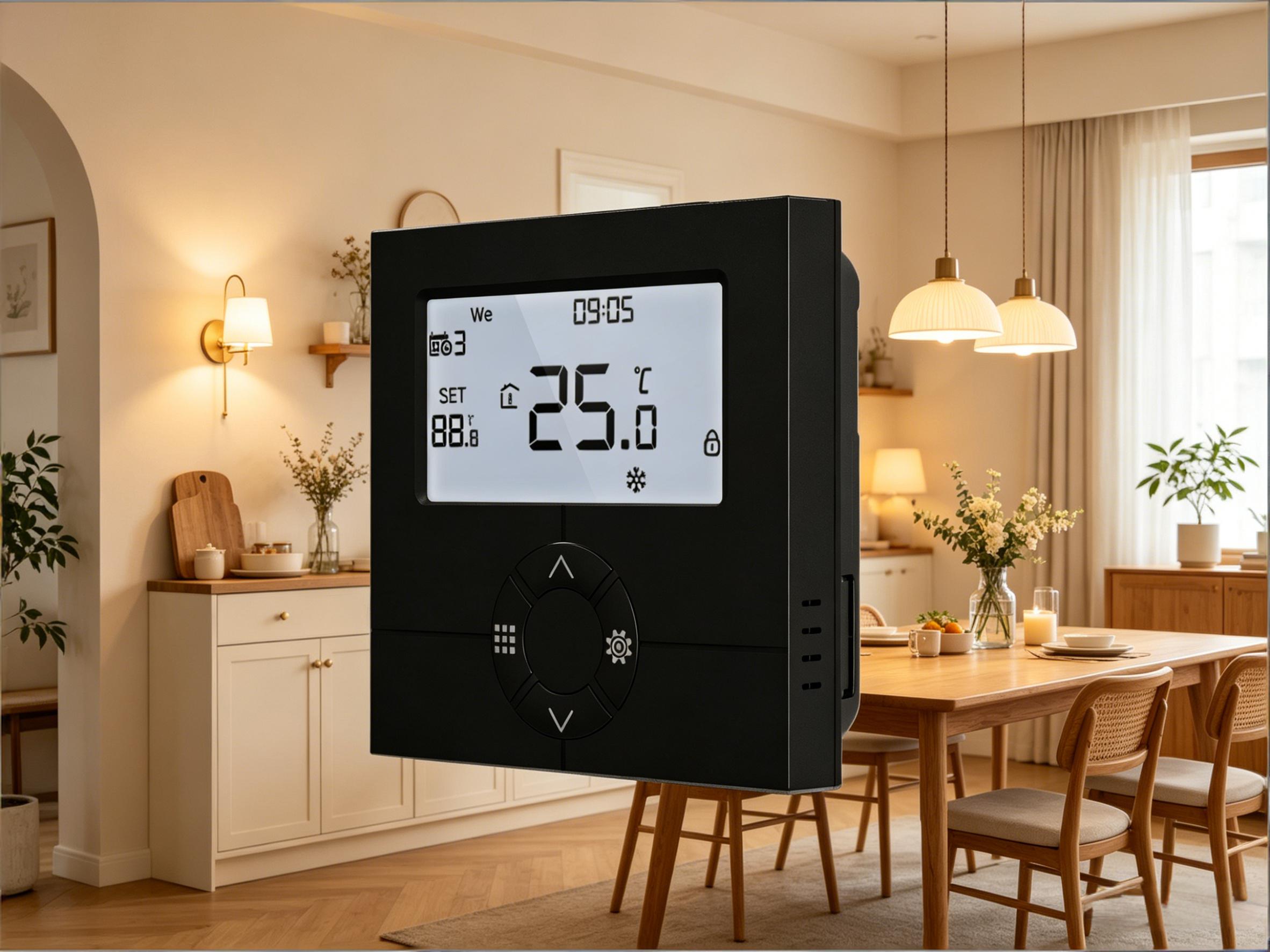
English Article: How to Match Normally Open / Normally Closed Electrothermal Actuators with Smart Thermostat Systems
Leave a message
When configuring floor heating, fan coil and HVAC zoning systems, electrothermal actuators are core matching components for smart thermostats. A key selection point lies in distinguishing Normally Open (NO) and Normally Closed (NC) types. Improper matching will cause temperature control failure, energy waste, pipeline freezing risk and system logic disorder. This guide explains their working principles, application scenarios and professional matching rules with smart thermostat systems.
Basic Definition of NO & NC Electrothermal Actuators
Normally Open (NO) Actuator: Keeps the valve open when power off; closes the valve to cut off water flow when powered on.
Normally Closed (NC) Actuator: Keeps the valve closed when power off; opens the valve to allow water circulation when powered on.
The core matching logic is consistent with the output signal logic of smart thermostats, realizing synchronous linkage of temperature detection and valve switch.
Core Matching Rules with Smart Thermostat Systems
Match by Thermostat Output LogicMost smart heating thermostats output power signal when room temperature is lower than the set value to start heating.
Choose NC Actuator: The thermostat outputs power → actuator opens the valve → hot water flows for heating; when reaching the set temperature, the thermostat cuts off power → actuator closes the valve to stop heating. This is the most mainstream matching solution for household and commercial independent heating systems.
Choose NO Actuator: Suitable for centralized heating systems. Power off keeps the valve open to maintain heating; power on closes the valve to stop heating when temperature is too high. It effectively prevents pipeline freezing caused by power failure in cold regions.
Match by Application Scenarios
Centralized Heating in Northern Residential Buildings: Prioritize NO actuators. Ensure the valve stays open under power failure to avoid pipeline freeze damage.
Single Household Boiler / Heat Pump Heating (South & Independent Houses): Adopt NC actuators. Realize precise on-demand heating, save energy and avoid unnecessary heat loss.
Commercial Places (Hotel, Hospital, Office, Shopping Mall): Use NC actuators for zoning temperature control, cooperating with smart thermostats to manage each area independently and optimize energy consumption.
Cooling System & Fan Coil Unit: Match NC actuators uniformly, linkage with thermostat to cut off chilled water flow timely when reaching the set cooling temperature.
Voltage & Wiring MatchingSmart thermostats are available in 230V and 24V types. Select the actuator with the same voltage specification as the thermostat, follow standard wiring protocols, and avoid signal mismatch caused by voltage confusion. Our smart thermostats support compatible docking with mainstream NO/NC actuators on the market, with reserved professional wiring terminals for simple installation and debugging.
Why Correct Matching Matters
Wrong type selection will lead to reverse operation: heating stops when needed and keeps running when unnecessary. It not only reduces indoor comfort but also causes extra energy consumption, even hidden dangers like pipe freezing and system overload. Reasonable matching of NO/NC actuators with smart thermostats ensures stable operation, accurate temperature control, energy saving and long service life of the whole HVAC system.
Conclusion
The key to actuator selection is confirming system heating mode, thermostat signal logic and application environment first. NC for independent on-demand heating, NO for centralized anti-freezing heating. Our smart thermostats are perfectly compatible with NO and NC electrothermal actuators, providing one-stop matching solutions for floor heating, fan coil and commercial zoning HVAC systems.
Hashtags
#SmartThermostat #ElectrothermalActuator #HVACSystem #FloorHeatingControl #NormallyOpen #NormallyClosed #TemperatureControlSolution #BuildingEnergySaving