

What is the response time of motorized valves?
Leave a message

As a supplier of Motorized Valves, I often get asked about the response time of these valves. It's a crucial factor, especially for industries where precise control and quick adjustments are key. So, let's dive into what exactly the response time of motorized valves is.
What is Response Time?
The response time of a motorized valve refers to the duration it takes for the valve to move from one position to another. It's measured from the moment a control signal is sent to the actuator until the valve reaches its new, desired position. This is a critical parameter, because in many applications, like in HVAC systems, chemical processing, or water treatment, a slow - acting valve can lead to inefficiencies or even cause problems.
Imagine an HVAC system where the temperature suddenly spikes. You'd want the motorized valve controlling the flow of coolant to open quickly to bring the temperature back down. If the response time is too long, the space could overheat, leading to discomfort for the occupants and potentially causing damage to sensitive equipment.
Factors Affecting Response Time
Valve Type
Different types of motorized valves have different response times. For instance, 2 Way Motorized Valves are relatively simple, with just two ports - an inlet and an outlet. They are often used for on - off control or for regulating the flow in a single direction. These valves generally have a faster response time compared to more complex valve types.
On the other hand, 3 - Way Motorized Ball Valves have three ports, which allows for more complex flow routing. These valves typically have a longer response time because they need to move the ball to direct the flow between different paths, which is a more complex mechanical operation.
Actuator Characteristics
The actuator is the part of the motorized valve that actually moves the valve element. The type, size, and power of the actuator play a huge role in determining the response time. A high - torque actuator can move the valve element faster. For example, electric actuators are a popular choice for motorized valves. They are known for their relatively quick response times, especially when compared to pneumatic actuators in some cases. However, the response time of an electric actuator can still vary depending on its design and power rating.
Valve Size and Design
Larger valves generally have longer response times. This is because they have more mass to move, and the internal components, like the valve disc or ball, need to travel a greater distance. Also, the design of the valve, such as the type of sealing mechanism and the flow path, can affect how quickly the valve can open or close. A valve with a complex flow path may take longer to adjust the flow rate, as the fluid has to navigate through more channels.
System Pressure
The pressure in the system where the motorized valve is installed can also impact the response time. High - pressure systems can make it more difficult for the actuator to move the valve element. For example, if the pressure on the valve is very high, the actuator needs to generate more force to open or close the valve, which can slow down the response time.
Measuring Response Time
To measure the response time of a motorized valve, you need to set up a test rig. First, you connect the valve to a control system that can send a precise control signal. Then, you use sensors to detect the position of the valve element. The control system sends a signal to the valve to change its position, and at the same time, the sensors start recording the position of the valve. The time difference between when the signal is sent and when the valve reaches its new position is the response time.
It's important to note that the response time can vary depending on the operating conditions. For example, if the valve has been in use for a long time, wear and tear on the components can increase the response time. Regular maintenance can help keep the response time within an acceptable range.
Importance of Response Time in Applications
HVAC Systems
In HVAC systems, motorized valves are used to control the flow of hot and cold water or refrigerant. A fast - responding valve can quickly adjust the temperature in a room. This not only improves the comfort of the occupants but also helps to save energy. If the valve can respond quickly to changes in temperature, the HVAC system doesn't have to work as hard, which reduces energy consumption.
Industrial Processes
In industries like chemical processing, the response time of motorized valves is crucial for process safety and quality control. For example, in a reaction vessel, if the flow of a reactant needs to be adjusted quickly to maintain the right chemical reaction, a slow - acting valve could lead to an unwanted reaction or even a dangerous situation.
How Our Motorized Valves Stack Up
As a supplier of Motorized Valves, we understand the importance of response time. We offer a wide range of Motorized Control Valves that are designed with response time in mind. Our engineers have worked hard to optimize the actuator design, valve size, and internal components to ensure that our valves have fast and reliable response times.
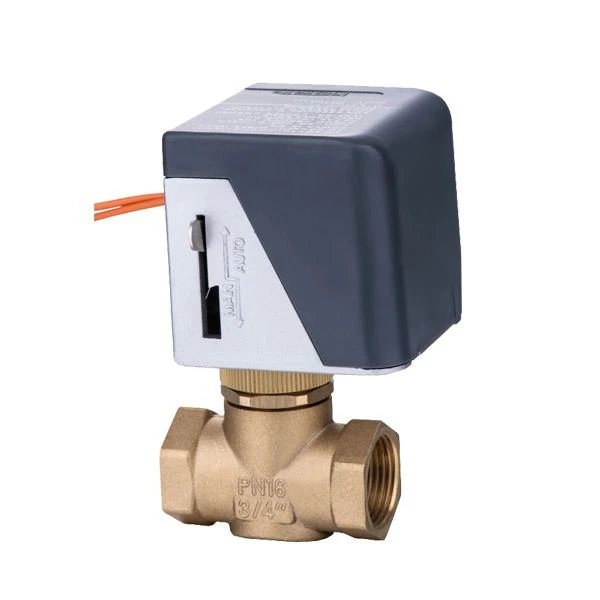

We also offer custom - built solutions for customers with specific requirements. Whether you need a valve with an extremely fast response time for a high - speed industrial process or a valve that can operate in a high - pressure environment, we can work with you to develop the right solution.
Conclusion
The response time of motorized valves is a vital characteristic that affects the performance and efficiency of many systems. It's influenced by factors such as valve type, actuator characteristics, valve size, and system pressure. As a supplier, we're committed to providing high - quality motorized valves with fast and reliable response times.
If you're in the market for motorized valves and want to learn more about how our products can meet your specific needs, don't hesitate to reach out. We're more than happy to have a chat about your requirements and see how we can help you with the right valve solution.
References
- "Valve Handbook" by Valve Manufacturers Association
- "HVAC Systems Design Handbook" by ASHRAE


