Why Some Thermostats Need Relays to Control High-Power Devices
Leave a message
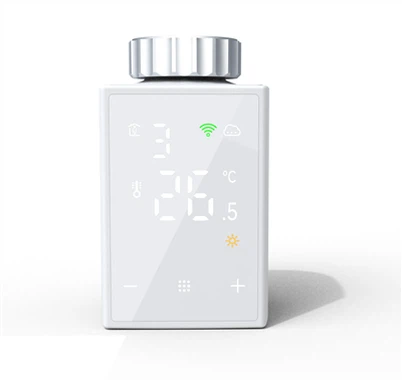
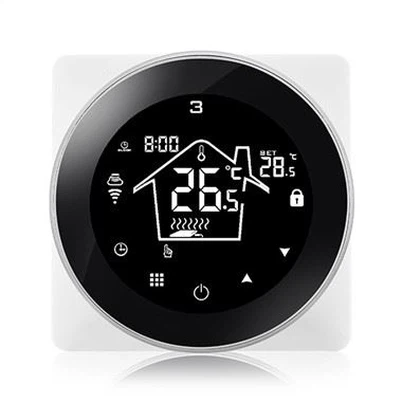
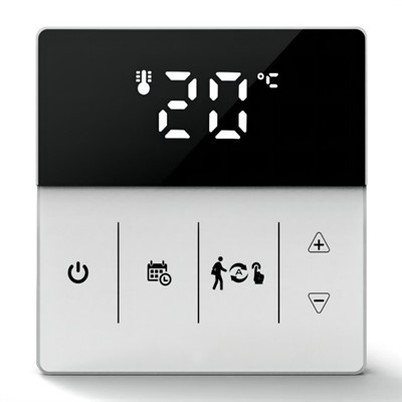
When upgrading HVAC, heating, or industrial temperature control systems, many users encounter a common issue: standard wall-mounted thermostats cannot directly run high-power equipment such as electric heaters, large fans, heat pumps, and commercial HVAC units. Instead, they must work with external relays to achieve stable control.
1. The Inherent Power Limit of Regular Thermostats
Most smart or mechanical thermostats on the market are designed for low-power signal output. Their built-in switches, circuit boards and contact components are only engineered for small current loads, usually ranging from 1A to 5A. These internal parts focus on precise temperature sensing, data calculation and signal switching, not heavy-duty power bearing.
In contrast, high-power heating and ventilation equipment requires a large operating current, often exceeding 10A, 20A or even higher. If a thermostat directly connects to such high-power loads, excessive current will burn internal contacts, melt circuit boards, cause short circuits, or trigger frequent equipment failures. In severe cases, it may even lead to overheating risks and electrical safety hazards.
2. Relays: A Safe Isolation and Power Conversion Bridge
A relay is a low-power control switch that separates the control circuit and the main power circuit.
The thermostat only needs to output a weak control signal to turn the relay on or off. The high-current power supply required by high-power equipment is completely borne by the relay with heavy-duty contacts.
This working mode brings two key advantages:
2.1 Load Isolation & Safety Protection
The low-power thermostat is isolated from high-voltage and high-current loads, effectively preventing current backflow and voltage impact from damaging the thermostat core. It greatly extends the service life of temperature control devices and reduces maintenance costs.
2.2 Strong Compatibility & Expandability
With a matched relay, one universal thermostat can flexibly control various high-power devices, including industrial heaters, commercial ventilation systems, water heating equipment and central air conditioning units. It breaks the power limit of ordinary thermostats and improves the overall matching flexibility of the temperature control system.
3. Stable Signal Transmission Ensures Accurate Temperature Control
High-power equipment will generate instantaneous current surges and electromagnetic interference when starting and stopping. Direct control by a thermostat will interfere with temperature sensing accuracy, resulting in frequent temperature fluctuations, incorrect switching actions, or delayed response.
The relay can shield electromagnetic interference and buffer instantaneous current impact. It ensures that the thermostat always maintains accurate temperature monitoring and stable command output, keeping the indoor or industrial environment at a set constant temperature.
Final Summary
In short, thermostats focus on precise temperature detection and control signal output, while high-power equipment needs heavy-duty components to bear large current.
Relays perfectly make up for the power gap of ordinary thermostats, realizing safe isolation, load expansion and anti-interference control. For all high-power HVAC and heating applications, matching a professional relay is a necessary and cost-effective configuration to ensure long-term stable and safe operation of the entire temperature control system.