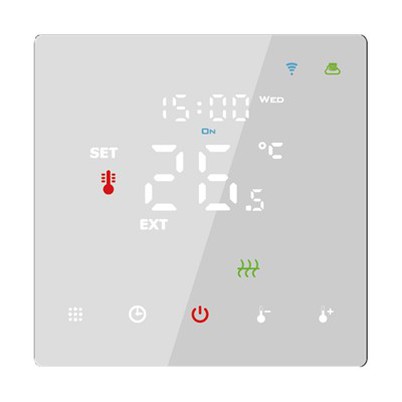
Smart Thermostat Wide Temperature Range Design: Storage & Operating Temperature Industry Standards Explained
Leave a message
When selecting a smart thermostat, wide temperature range design-covering both storage and operating conditions-stands as a non-negotiable factor for reliability, longevity, and consistent performance across diverse environments. Whether for residential comfort, commercial HVAC, or industrial automation, understanding the industry standards governing these temperature parameters ensures you choose a thermostat that can withstand extreme cold, scorching heat, and everything in between. This article dives into the key standards, critical temperature ranges, and why wide-temperature design matters for your smart thermostat investment.
Why Temperature Range Design Is Critical for Smart Thermostats
Smart thermostats are precision electronic devices integrating sensors, microcontrollers, communication modules (Wi-Fi/ZigBee/LoRaWAN), and display components. Extreme temperatures directly impact:
Component Stability: High temperatures cause semiconductor aging, solder joint failure, and sensor drift; low temperatures lead to battery drain, LCD freezing, and circuit brittleness.
Control Accuracy: Temperature deviations beyond the rated range result in inaccurate readings (exceeding the standard ±0.5℃ precision) and erratic HVAC control.
Operational Continuity: Out-of-range temperatures trigger system crashes, communication drops, or permanent hardware damage.
Storage & Logistics: Improper storage temperatures during shipping or inventory shorten the thermostat's lifespan before installation.
Core Industry Standards for Smart Thermostat Temperature Ranges
Global and regional standards bodies have established clear guidelines for thermostat storage and operating temperatures, ensuring interoperability, safety, and reliability. Below are the most widely adopted standards:
1. Chinese National Standards (GB Series)
GB/T 23131-2008 (Room Thermostat Technical Requirements): Defines baseline operating temperature for residential thermostats at 0℃ to 40℃ and storage temperature at -10℃ to 60℃. Mandates temperature control accuracy within ±1℃ for compliance.
GB/T 2423 Series (Environmental Testing for Electronic Products): Specifies temperature cycle, high-temperature storage, and low-temperature endurance tests to validate performance under extreme conditions.
GB 4706.1-2005 (Household Appliance Safety): Sets safety thresholds for temperature resistance, ensuring no fire hazards or electric shock risks at maximum operating temperatures.
GB/T 28219 (Smart Thermostat Aging Testing): Requires 1,000 hours of continuous operation at 60℃ to verify long-term reliability in high-heat environments.
2. International Electrotechnical Commission (IEC) Standards
IEC 60730-1:2011 & IEC 60730-2-9:2011: Global safety and performance standards for thermostats. Specify 0℃ to 45℃ for general operating environments and -20℃ to 60℃ for industrial wide-temperature models. Storage temperature ranges from -40℃ to 85℃ for industrial compliance.
3. European (EN) & North American Standards
EN 15500: European HVAC standard aligning with IEC 60730, requiring operating temperatures of 0℃ to 45℃ for residential use and -10℃ to 60℃ for commercial applications.
California Energy Commission (CEC): Mandates operating temperatures of 0℃ to 55℃ for smart thermostats sold in North America, with storage temperatures ranging from -20℃ to 45℃.
Standard vs. Wide-Temperature Range: Key Parameters
1. Operating Temperature Range
The operating range refers to the temperature band where the thermostat maintains full functionality and accuracy.
| Application Scenario | Standard Range | Wide-Temperature Range | Compliance Standards |
|---|---|---|---|
| Residential (Indoor) | 0℃ to 45℃ | -10℃ to 50℃ | GB/T 23131, EN 15500 |
| Commercial (Offices/Malls) | 0℃ to 50℃ | -15℃ to 60℃ | IEC 60730, GB/T 2423 |
| Industrial (Warehouses/Outdoor) | -20℃ to 60℃ | -30℃ to 70℃ | IEC 60730, GB/T 28219 |
| Cold Storage/Refrigeration | -10℃ to 40℃ | -40℃ to 50℃ | Custom Industrial Standards |
Data compiled from GB/T 23131, IEC 60730, and industrial thermostat specifications
2. Storage Temperature Range
The storage range applies to non-operating conditions (shipping, inventory, seasonal storage) and protects components from degradation.
Standard Storage: -10℃ to 60℃ (residential/commercial)
Wide-Temperature Storage: -40℃ to 85℃ (industrial/high-reliability models)
Critical Note: Humidity must stay within 10% to 90% RH (non-condensing) for both operating and storage conditions to avoid moisture damage.
Hysen's Wide-Temperature Smart Thermostats: Engineered for Extreme Environments
At Hysen Control Technology, we design smart thermostats that exceed industry wide-temperature standards, delivering unmatched reliability for residential, commercial, and industrial applications. Our key temperature specifications include:
Operating Temperature: -20℃ to 60℃ (outperforming standard 0℃ to 45℃ models)
Storage Temperature: -40℃ to 85℃ (industrial-grade protection for shipping/storage)
Accuracy: ±0.5℃ across the entire operating range (exceeding GB/T 23131's ±1℃ requirement)
Certifications: CE, RoHS, WEEE, and compliance with GB/T 23131, IEC 60730, and EN 15500
Why Choose Hysen's Wide-Temperature Thermostats?
All-Environment Adaptability: Perfect for unheated attics, northern outdoor equipment boxes, boiler rooms, and sun-exposed outdoor cabinets.
Long-Term Reliability: Industrial-grade components undergo 1,000 hours of aging testing at 60℃, ensuring decades of stable operation.
Cost Savings: Eliminates the need for additional temperature control enclosures in extreme environments, reducing installation and maintenance costs.
Smart Connectivity: Wi-Fi/ZigBee/LoRaWAN communication remains stable at -20℃ to 60℃, enabling remote control and scheduling year-round.
Final Thoughts: Prioritize Wide-Temperature Design for Long-Term Value
Industry standards set the baseline for smart thermostat performance, but wide-temperature range design elevates reliability to meet real-world extreme environment challenges. Whether you're upgrading a residential HVAC system, managing a commercial building, or optimizing industrial temperature control, choosing a thermostat that complies with and exceeds GB, IEC, and EN standards ensures consistent accuracy, minimal downtime, and maximum longevity.
Hysen's smart thermostats combine industry-leading wide-temperature performance, precise control, and smart connectivity to deliver the ultimate temperature management solution for any environment. Explore our full range of smart thermostats today and experience the difference of engineered reliability.