AI Thermostats: Changing Our Lifestyles and Interactions with the Environment
Leave a message
Driven by the wave of technology, AI thermostats are quietly reshaping our relationship with the environment. From homes to industry, from energy conservation to health, a revolution in intelligent temperature control has arrived.
Wake up in the morning to the perfect indoor temperature; return home from work to find the air conditioner pre-set to your most comfortable setting; even while showering, the water heater automatically adjusts to your needs and body temperature-none of this is science fiction anymore.
AI thermostats react to ambient temperature changes by physically deforming to produce special effects, turning on or off the device. They are infiltrating every aspect of our daily lives in a "non-sensing" manner.

Smart Home: From Manual Control to Proactive Service
Traditional thermostats require manual adjustment, while AI thermostats learn user habits and automatically create a comfortable environment.
Take the Nest smart thermostat, for example. It learns the user's daily routines and automatically adjusts the indoor temperature based on outdoor weather data. If the system detects that a user typically wakes up at 6:00 AM, it will raise the bedroom temperature to 22°C one hour in advance, reducing nighttime energy consumption by 15%-20%.
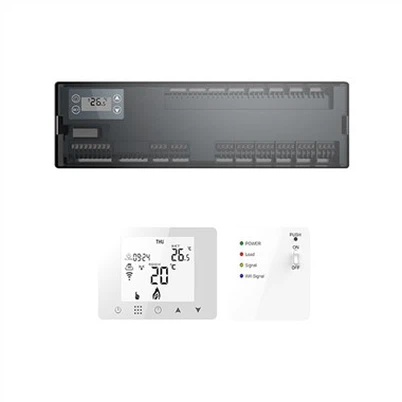
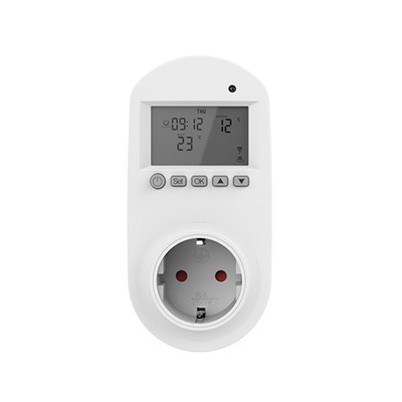
These products typically feature a large LCD display showing room temperature, cooling or heating status, fan speed, and clock information. They also have a power-off memory function, automatically resetting to pre-power-off settings upon incoming calls.
Four fan speed settings (high, medium, low, and auto) and a room temperature correction function provide users with a personalized comfort experience.
Energy Saving and Consumption Reduction: From Energy Consumption to Environmental Protection
AI thermostats have achieved remarkable energy-saving performance. Taiyuan Mobile's digitally integrated thermal management system for communication rooms combines three core elements: AI algorithms, fresh air systems, and air conditioning synergy.
The system uses a hybrid algorithm of deep reinforcement learning and long-short-term memory networks to predict environmental changes 30 minutes in advance based on 72 hours of historical data on outdoor temperature and humidity, equipment room heat load, and other factors.
In homes, AI thermostats can also significantly reduce energy consumption. By analyzing user behavior patterns and environmental conditions, they optimize heating and cooling system operating hours and avoid energy waste.

Industrial Applications: From Extensive Management to Precision Control
In the industrial sector, AI thermostats are becoming a key technology for improving production efficiency and product quality. Touch-operated thermostats utilize a new AI-powered PID logic algorithm to achieve zero-overshoot and zero-undershoot control for complex, long-lag systems.
AI thermostats are evolving toward high-brightness TFT LCD touchscreens, ultra-thin designs, comprehensive cooling systems, and multi-language menu support. Data logging capabilities are being developed to display real-time trends, bar graphs, and historical trends, and provide report-based data and alarm functions.
These high-performance AI thermostats are widely used in emerging industries such as photovoltaics, semiconductors, lithium batteries, and biotechnology, improving industrial temperature management and achieving energy savings, cost reduction, and increased efficiency.
Health Care: From General Settings to Personalized Care
The application of AI thermostats in the health sector is particularly noteworthy. The trend toward personalized climate customization, which will emerge in 2025, will shift temperature control devices from a "space-centric" approach to an "individual-centric" approach.
Some innovative companies have developed temperature control systems that can recognize biological signs. For example, they can customize constant temperature and wind speed for pets by identifying a medium wind speed of 26°C for long-haired cats, enabling precise environmental matching.
In medical settings, postoperative patients can wear smart temperature-control vests, where AI dynamically maintains a constant local temperature based on the wound's recovery stage. Wristbands for individuals with Alzheimer's disease can automatically alert and adjust the room temperature when their body temperature is abnormal.


Core Technology: From Simple Control to Intelligent Decision-Making
The core technology of AI thermostats is an intelligent decision-making system based on artificial intelligence. Santong Electronics' patented technology includes a multi-source data acquisition module, a user behavior analysis module, and a mode decision engine.
This system dynamically selects set or restore mode based on current environmental parameters, the user's real-time location, and time information, intelligently selecting the appropriate execution mode when a user initiates a control command through the global control interface.
Some high-end models even have built-in web servers and Ethernet interfaces, allowing remote monitoring and operation via a browser.
Future Trend: From Room Cooling to Personalized Climate Control
Temperature control technology is evolving towards miniaturization and personalization. By 2025, the air conditioning industry will be moving from "room cooling" to "personalized climate control," evolving from bulky wall-mounted units to wearable, portable, and embedded microclimate control devices.
The underlying logic of this transformation is a radical shift in consumer sovereignty. Traditional air conditioners assume everyone shares the same temperature zone, sacrificing individual comfort for overall energy efficiency. But now, young people demand "26°C for me, not 26°C for everyone."

Summary
In the future, we may see more miniature temperature control devices integrated with AI technology. For example, a neck-shaped thermostat weighs only 80 grams, yet efficiently regulates perceived temperature through the blood vessels in the neck and lasts for up to 8 hours.
AI thermostats bring more than just comfort; they also enable precise resource allocation. A communications equipment room in Taiyuan, China, achieved a monthly energy savings of 68.7% after implementing AI temperature control, with cumulative energy savings equivalent to reducing carbon emissions by 802 tons.
With technological advancements, thermostats will evolve from mechanical devices that adjust room temperature to personalized companions that understand every pore. Your smart bracelet might automatically activate a soothing breeze when it detects anxiety.
A true technological revolution isn't about making machines more powerful, but about empowering humans. In 2025, the "era of climate sovereignty," belonging to everyone, is quietly approaching.